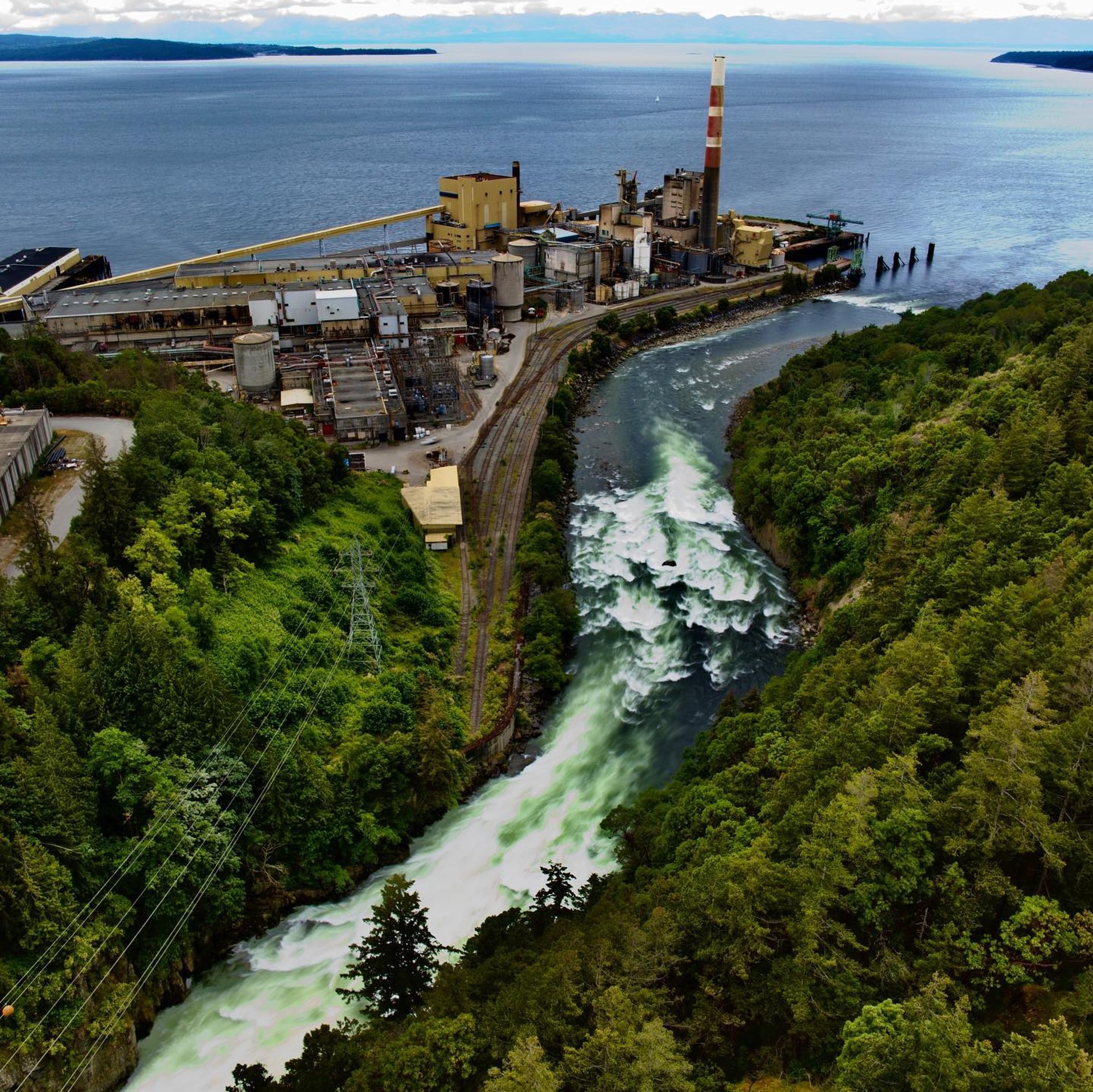
Promoting healthy watersheds and local benefits from energy production
Our mission
By promoting positive models of energy democracy, ED4BC aims to ensure that local communities benefit from the electricity generated at dams. We also advocate for improved management of dams to mitigate against their harmful impacts.
Community Organizing Brought Lasting Benefits to Columbia Basin Residents
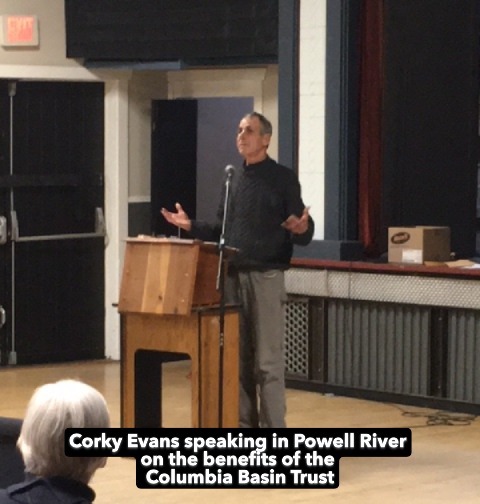
The Columbia Basin Trust was created in 1995 following successful grassroots organizing, in co-operation with First Nations, by those who were impacted by regional dams. Today, the Trust ensures that they receive lasting social, economic, and environmental benefits from dam operations.
In the 2023/2024 fiscal year, these benefits totalled $80.8 million, with key grants and loans including:
$2.3 million to seniors’ centers in Kaslo, Nakusp, Salmo, and Sparwood for backup power systems and emergency preparedness upgrades
$2 million for ecosystem restoration, including a grant to Golden’s Rod and Gun Club to work with the Ktunaxa Nation Council Guardians on elk habitat improvement
$13 million in new business loans, supporting small businesses and food producers
Since 2015, $47.2 million has gone to housing initiatives, enabling 1,109 affordable housing units, including new construction in Kaslo and Revelstoke
Public Engagement Led to BC Hydro Compensation Program
In response to sustained public pressure from First Nations and conservation groups like the BC Wildlife Federation, BC Hydro launched the Fish and Wildlife Compensation Program (FWCP) in 1988 to help address environmental damage caused by its dams.
For the 2024/2025 fiscal year, BC Hydro allocated $8.7 million to the FWCP overall, with $2.4 million going to projects in the Coastal Region. These included:
$173,000 for Campbell River Watershed projects, such as gravel placement to improve fish habitat, estuary restoration, and invasive species control
$400,000 to help protect the Puntledge Forest from logging. This initiative aimed to preserve 100 hectares of ecologically significant land along the Puntledge River.
Groups like the BC Wildlife Federation continue to push for increased FWCP funding and more effective distribution of resources.
Community Voices Make a Difference....
Update on PREI’s 30-Year Export Application
The Canada Energy Regulator's procedure to decide on Powell River Energy Inc.'s application to get a 30-year export license is underway. Energy Democracy for BC has been granted intervenor status and is being represented by a lawyer from the BC Public Interest Advocacy Centre.
You can see our submissions, those of other intervenors and PREI, and communications from the Regulator here https://apps.cer-rec.gc.ca/REGDOCS/Item/View/4592789
SAVE the DATE! The Tla'amin Nation has asked the Canada Energy Regulator to hold the oral presentations part of the process in the qathet area, and the Regulator agreed. Right now, the first day of those presentations is scheduled for November 16.
While this regulatory process with approved intervenors is going on, it is important to make sure the federal government continues to hear from the public. Even if you have already signed a petition and/or sent a letter, please send a letter by email - HonTim.Hodgson@nrcan-rncan.gc.ca - or post (no stamp needed) to Tim Hodgson, the federal minister responsible for energy. You might want to point out how a 30 year electricity export license conflicts with the minister's new national electrification strategy announced just this May.
Here's a sample of what you might say, but of course it's always better to use your own words.
Tim Hodgson
House of Commons
Ottawa, ON
K1A 0A6
To Honourable Minister of Energy and Natural Resources Tim Hodgson:
I am writing to express concern about Powell River Energy Inc.’s (PREI) 30-year application to export all the power from its local dams to the U.S.
In 2021, our paper mill closed—a major economic blow to our community. PREI, the mill’s former power supplier, then shifted to exports. Now, as businesses work to redevelop the site, PREI’s plan to lock in exports until 2055 is undermining economic recovery efforts.
PREI’s export application directly conflicts with your government’s policy “Powering Canada Strong: A National Strategy for an Electrified Canadian Economy” by:
Reducing electricity available for domestic industry;
Undermining electrification and climate goals;
Raising electricity costs for Canadian businesses; and
Failing to create jobs despite using Canada’s water resources.
I urge your government to ensure the Canada Energy Regulator considers these factors when reviewing PREI’s application.
I look forward to your response.
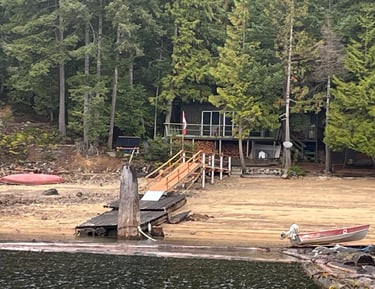
PROMOTING COMMUNITY BENEFITS
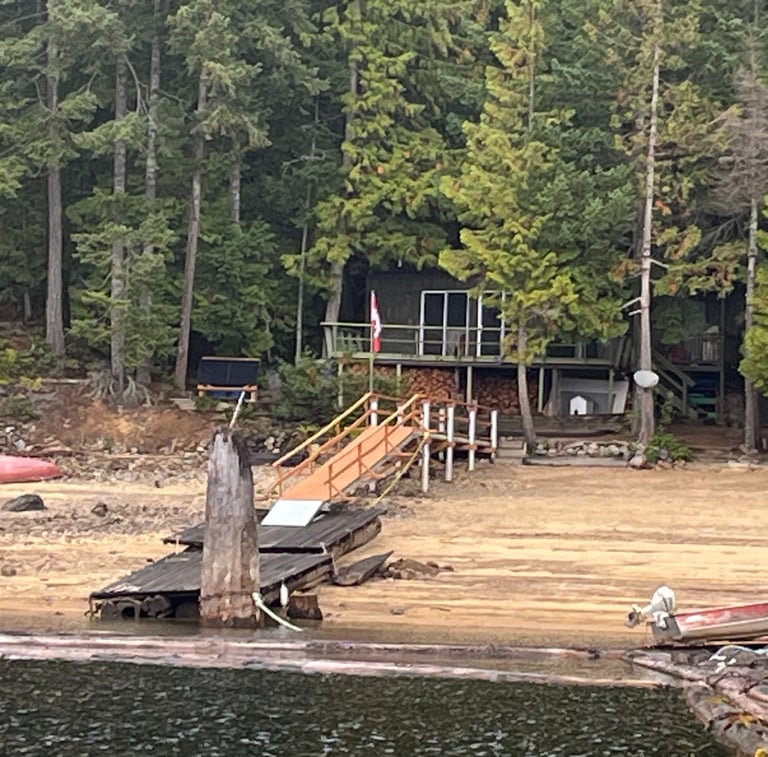
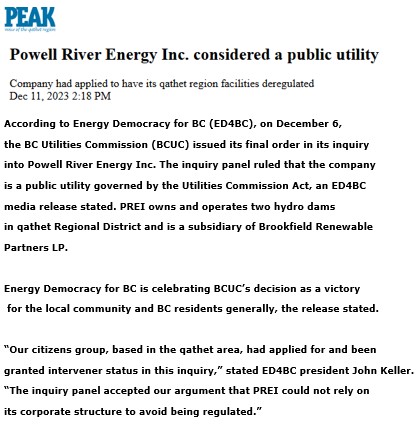
RESEARCH AND SUBMISSIONS
ADVOCATING FOR BETTER WATERSHED MANAGEMENT
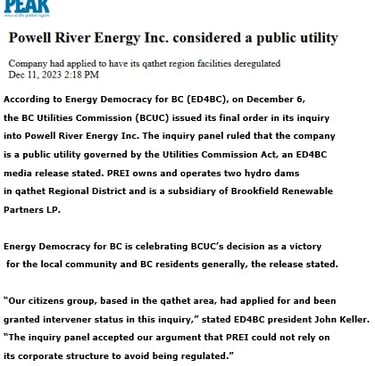
Watersheds impacted
by dams in the qathet region


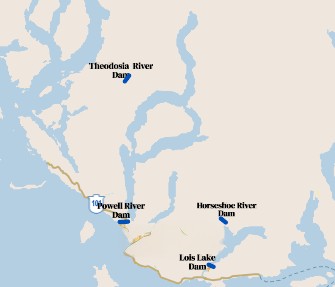
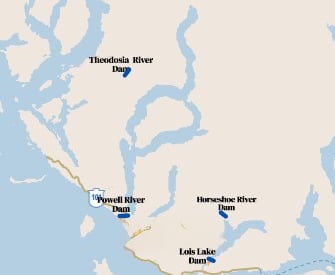
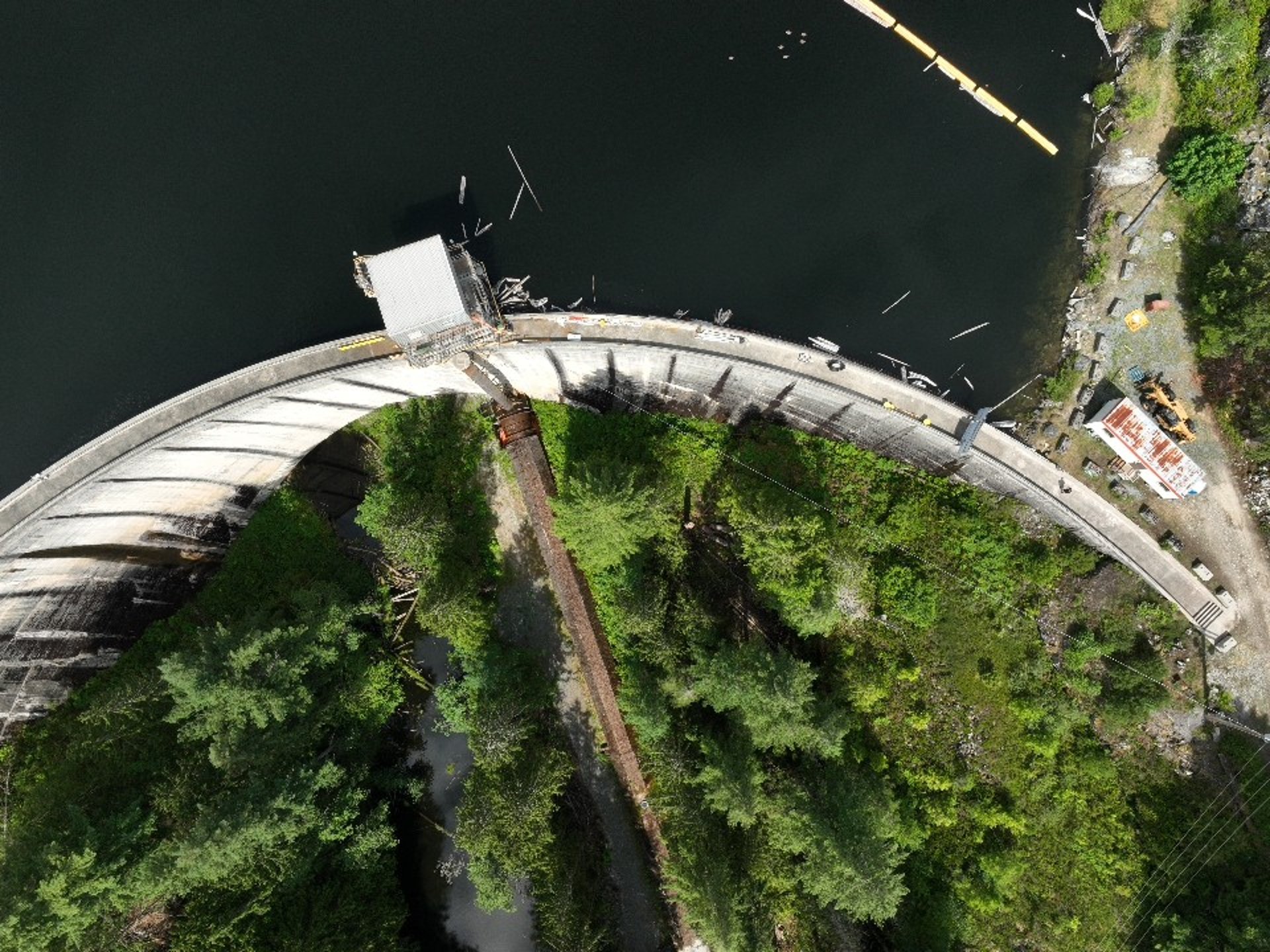
Powell River Energy's 4 dams have major impacts on local watersheds
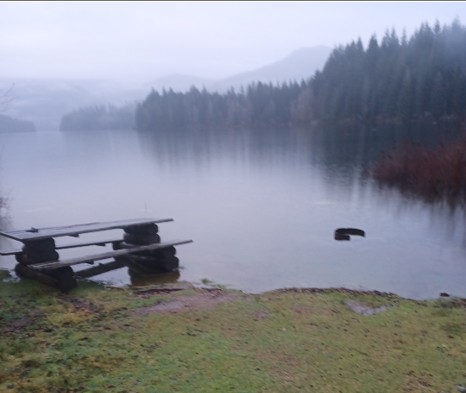
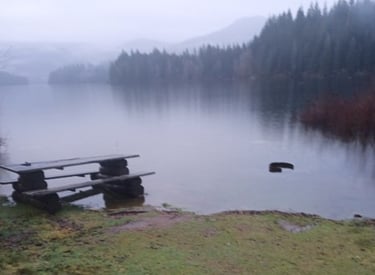
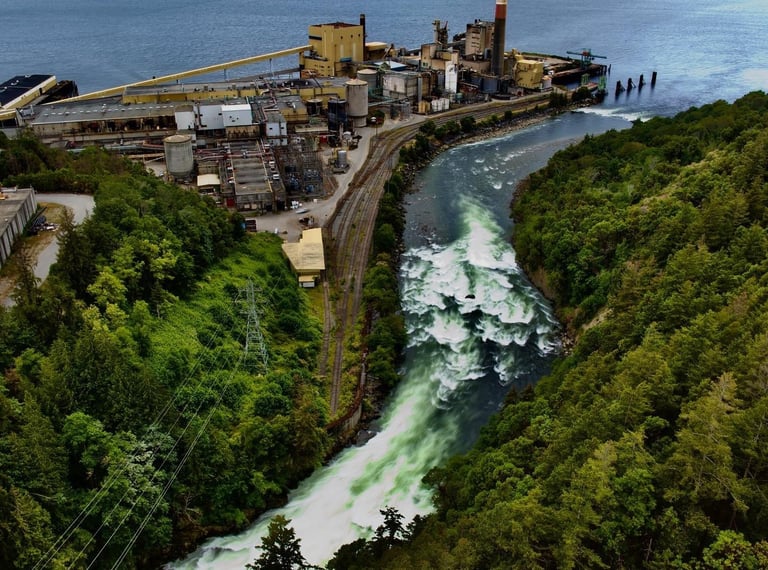
Over 7 square miles of Crown land can be flooded by PREI's dams
The dams' negative impacts were once balanced by jobs created at the mill that they powered - now all the electricity is exported.
→
→
→
→
Get in Touch with Us
This website was intended as a community resource to make accessible what we've learned about the dams in our region. If you have questions or would like to share what you know, please contact us.
ed4bc@shaw.ca
© 2025. All rights reserved.